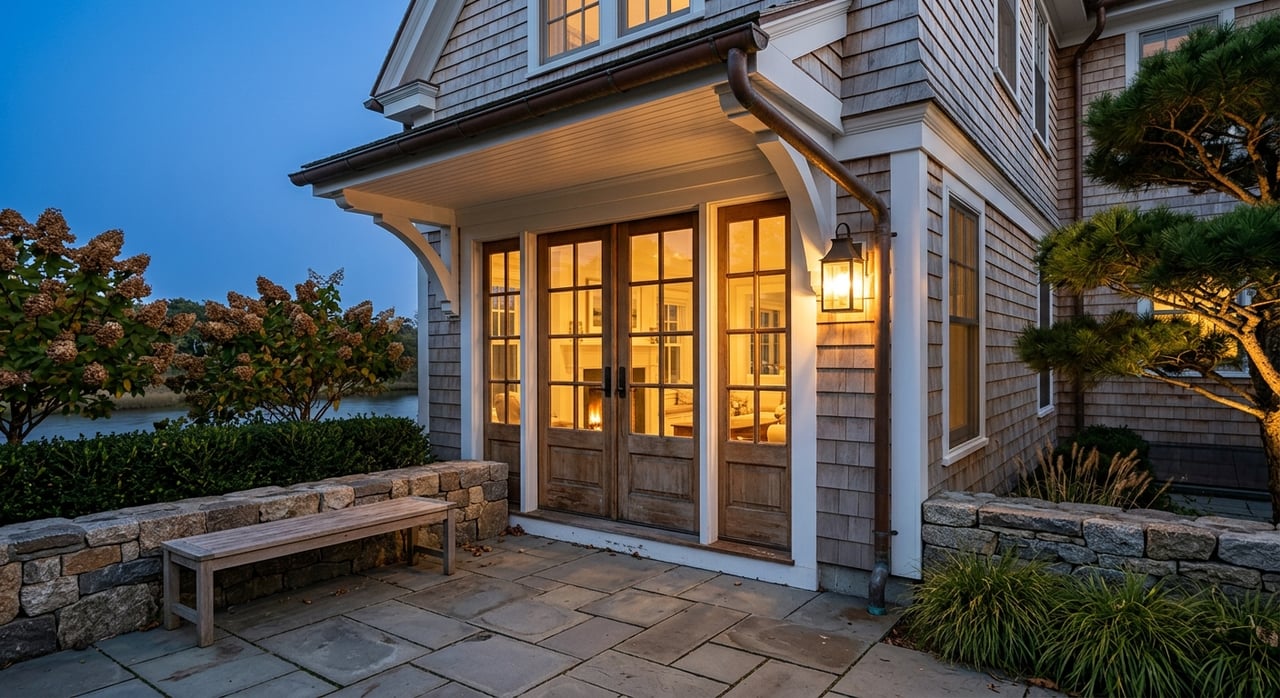
Newport Waterfront Living: From Summer Escape To Year-Round Home
May 14, 2026
May 14, 2026
If Newport has ever felt like a place you visit in July and daydream about the rest of the year, you are not alone. Many buyers are drawn in by the harbor views, sailing culture, and historic shoreline, then start asking a bigger question: could waterfront living here work beyond summer? The answer depends on how you define waterfront, how you plan to use the home, and how prepared you are for the realities of coastal ownership. Let’s dive in.
Newport’s appeal runs deeper than a classic summer image. Official destination materials describe the city as a former major Colonial Era seaport, the historic home of the America’s Cup, and today’s Sailing Capital of the World. That maritime identity is not a marketing add-on. It is part of how the city functions and how people experience it year after year.
You can see that identity in the places that shape daily life and long weekends alike. Cliff Walk stretches about 3.5 miles along the Atlantic and pairs ocean views with historic Gilded Age mansions. Downtown is also a major part of the waterfront experience, with walkable streets, dining, shops, and a visible connection to the harbor.
The boating culture adds another layer of staying power. Newport is considered one of the sailing capitals of the world, and it is home to the largest fleet of America’s Cup 12 Meters in the world. Events like the Newport International Boat Show keep that energy front and center, with large in-water displays, dock access, and marine seminars in historic downtown.
It is easy to think of Newport as a warm-weather escape, but official tourism materials present it as a four-season destination. Summer may get the spotlight, yet autumn, winter, and spring are all part of the city’s identity. That matters if you are considering a primary residence, a second home, or even an occasional-use property that needs to fit real life instead of just peak-season plans.
The annual calendar helps explain why interest carries through the year. Newport hosts recurring summer events like Folk, Jazz, Classical, and the International Boat Show, while cultural programming continues with tours, lectures, and holiday events at the Newport Mansions. In other words, the city does not shut down when summer ends, but the rhythm does change.
That seasonal shift is important for buyers. A home that feels perfect in August may feel very different in January. The best purchase is usually the one that supports your actual year-round pattern of use, not just your favorite version of Newport on a sunny weekend.
One of the biggest mistakes buyers can make is assuming all waterfront property in Newport works the same way. It does not. The city’s land-use framework shows that the waterfront is a mix of residential areas, public shoreline, marine-oriented uses, recreation, downtown activity, and historic streetscapes.
Downtown stretches from Memorial Boulevard to Bridge Street and includes historic homes, retail, restaurants, hotels, higher-density residential uses, and marine businesses. On the eastern side, parts of this area fall within a historic district. That creates a waterfront setting with strong character, but not always the same kind of property options you might expect in a more suburban coastal market.
There is also an important planning detail many buyers do not realize at first. In Newport’s Traditional Maritime district, residential use is prohibited. That means some of the shoreline you notice most is not intended for housing at all, even if it looks like prime waterfront from a distance.
In practice, Newport buyers are often choosing between a few different lifestyle setups rather than one simple “waterfront” category. Your decision usually comes down to how you want to live on a daily basis.
These properties offer the closest relationship to the water. For some buyers, that direct connection is the entire point of owning in Newport. The tradeoff is that proximity to the shoreline can also increase attention to flood exposure, storm impacts, and long-term maintenance.
These homes may not sit directly on the shoreline, but they can offer a strong coastal lifestyle with easier access to downtown, harbor areas, and waterfront amenities. For many year-round owners, this can be a practical middle ground. You still enjoy Newport’s setting while gaining flexibility around access, parking, and everyday convenience.
Some homes deliver water views without direct shoreline access. In Newport, that distinction matters. Two homes may share similar scenery while offering very different daily-living realities depending on public access patterns, nearby uses, and how the surrounding area functions through the seasons.
For buyers who want the waterfront lifestyle without centering every decision on the edge of the harbor, downtown-adjacent homes and condos can make a lot of sense. Newport is described in city planning materials as a small-scaled walkable urban neighborhood. That means walkability, parking, and access often carry as much weight as lot size.
The biggest difference between a summer escape and a year-round home is not just weather. It is the level of planning your property needs and the way you move through the city in the off-season.
NOAA climate normals for Newport State Airport show a January average high of 38.1°F and a January average low of 24.1°F, along with 42.18 inches of annual precipitation. In simple terms, winter here means cold temperatures, freeze-thaw cycles, snow and ice, and routine upkeep. That is very manageable for many owners, but it is not the same experience as July on the harbor.
Some of Newport’s best-known attractions also operate differently in colder months. Discover Newport notes that Cliff Walk can be icy in winter. Newport Mansions programming continues through the year, but schedules vary by property and season, with some open daily in peak periods and others operating only on selected days or closing seasonally.
For full-time owners, those changes are usually part of the appeal. The city takes on a quieter pace, and the walkable layout can still support daily routines. For second-home owners, the question becomes more operational: who is monitoring the property, how is it winterized, and what systems are in place when you are away?
A Newport waterfront purchase is both a lifestyle decision and a property management decision. The closer you are to the coast, the more important it is to think clearly about exposure, maintenance, and resilience.
City planning documents note that local coastal ponds, wetlands, and infrastructure are vulnerable to sea-level rise and storm surge. The city also addresses FEMA flood zones and stricter standards in coastal V zones. Flood risk is not static, so property-specific location matters.
Marine exposure affects routine upkeep as well. Salt is pervasive in coastal environments, and corrosion is a major driver of maintenance and lifecycle costs. That can influence exterior materials, hardware, mechanical systems, and the value of regular inspections.
This is one reason buyers benefit from looking beyond the view. A beautiful setting matters, but so do practical questions about building condition, systems, parking, access, and how the home performs in every season.
The strongest Newport home searches usually start with use case, not emotion. Before you focus on style, views, or even price, it helps to define how you really plan to use the property.
Ask yourself a few simple questions:
Those answers can quickly narrow the field. Newport’s central location also supports different ownership patterns, since the city is positioned roughly 90 minutes south of Boston and about 3 hours north of New York City. That makes it attractive for both full-time living and part-time use, but each path leads to different property priorities.
In Newport, the best waterfront home is rarely the one that looks best in photos alone. It is the one that fits the way you will actually live. For one buyer, that may mean a harborfront property with a close connection to boating culture. For another, it may mean a downtown-adjacent condo with walkable access and fewer seasonal maintenance demands.
That is especially true in a market where public shoreline, maritime districts, historic areas, and residential streets all overlap. The same view can support very different experiences depending on what surrounds it. Looking closely at how a home functions in October, January, and April can be just as important as imagining a perfect August afternoon.
If you are weighing Newport as a summer retreat, a year-round residence, or an investment-minded coastal purchase, clarity comes from matching the property to your real goals. When you do that, Newport stops feeling like a short season and starts feeling like a place you can truly use well.
If you are exploring Newport waterfront opportunities and want a thoughtful, high-touch approach to the search, Livingston Group can help you evaluate lifestyle fit, property realities, and long-term value with confidence.
Stay up to date on the latest real estate trends.